SAP
The German software that runs half the world's supply chains
By VastBlue Editorial · 2026-03-26 · 18 min read
Series: Made in Europe · Episode 5
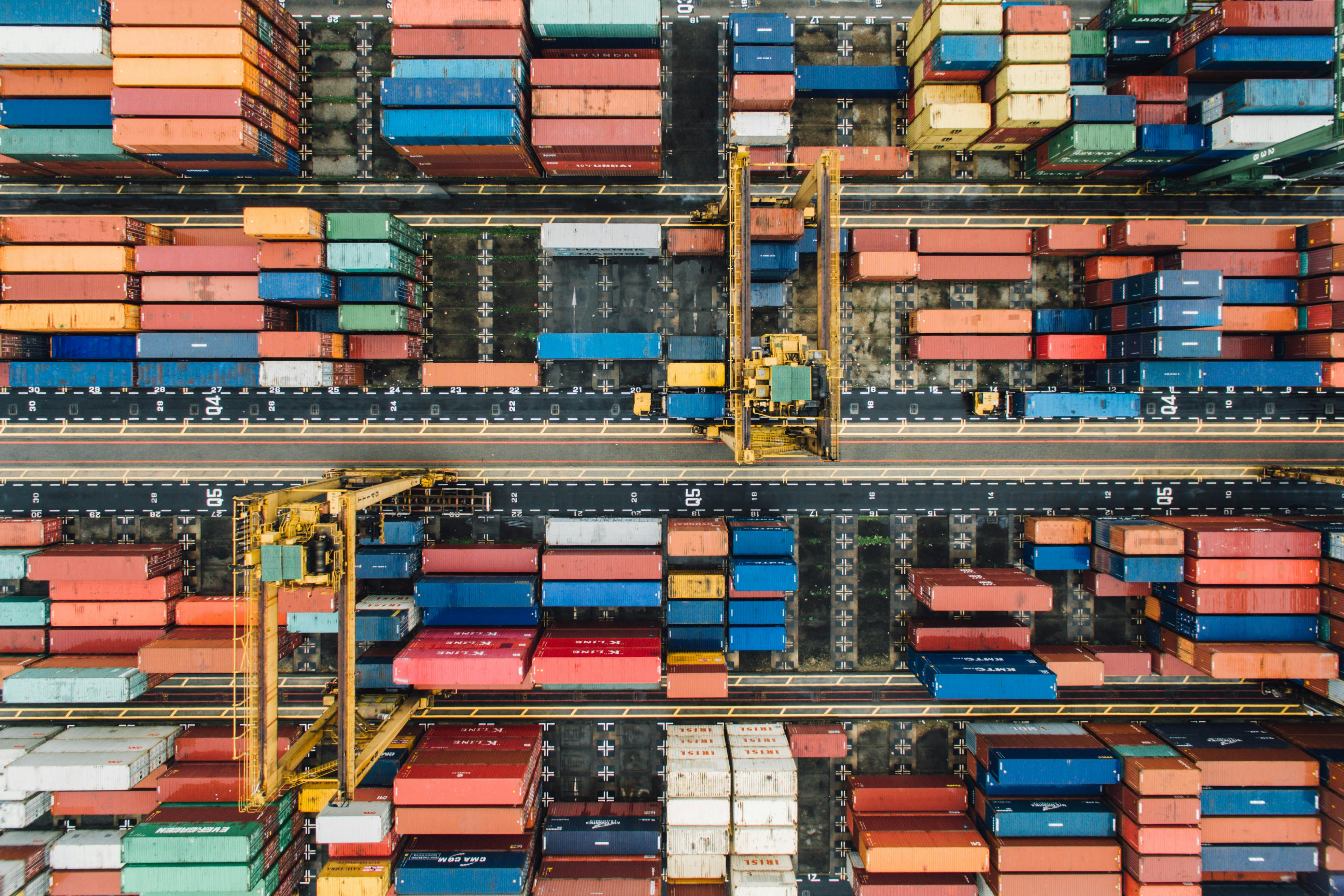
The Invisible Operating System of Global Commerce
You have never used SAP. You are almost certain of this. You have never downloaded it from an app store, never seen its logo on a login screen, never typed its name into a search bar looking for help. If someone asked you to name the most important software companies in the world, you would say Apple, Google, Microsoft, maybe Amazon. You would not say SAP. Almost nobody outside the world of business operations would. And that is precisely the point.
But SAP has touched virtually every physical object you have purchased in the last decade. The shirt you are wearing was likely ordered, manufactured, shipped, warehoused, invoiced, and paid for through systems that SAP built. The medicine in your cabinet, the car in your driveway, the food in your refrigerator — at some point in each of their journeys from raw material to finished product, the transaction passed through SAP software. Not might have. Almost certainly did.
SAP SE, headquartered in Walldorf, a town of 16,000 people in the Rhine-Neckar metropolitan region of Baden-Württemberg, Germany, is the largest enterprise software company in Europe and one of the largest in the world. In 2024, the company reported revenues of €33.5 billion and employed over 107,000 people across 130 countries. Its software manages the core business processes — procurement, manufacturing, logistics, finance, human resources, sales — of approximately 300,000 customers worldwide. Among the Fortune 500, 92 per cent run SAP. Among the world's commercial transactions, the company estimates that 77 per cent touch an SAP system at some point in their lifecycle.
This is not a consumer technology company. It is not trying to go viral. It does not care whether you know its name. SAP is the plumbing of the global economy — unseen, unappreciated, and utterly indispensable. When it works, nobody notices. When it breaks, entire supply chains stop.
Five Engineers and a Mainframe
The story of SAP begins in 1972, not in a garage or a dormitory but in an IBM office in Mannheim, West Germany. Five former IBM engineers — Dietmar Hopp, Hasso Plattner, Claus Wellenreuther, Klaus Tschira, and Hans-Werner Hector — left the American computing giant to start their own company. They called it Systemanalyse Programmentwicklung, or Systems Analysis and Program Development. The acronym SAP was easier to remember than the ambition was to execute.
Their founding insight was deceptively simple but genuinely revolutionary for its time. In 1972, business computing meant batch processing. A company would collect data throughout the day — orders, invoices, inventory counts, payroll figures — and feed it into a mainframe overnight. The next morning, managers would receive printed reports showing yesterday's numbers. Decisions were always made on stale data. The five founders believed it was possible to process business data in real time, as transactions occurred, so that every department in a company could see the same, current information at the same moment.
This concept — real-time, integrated enterprise data processing — seems obvious now. In 1972, it was radical. Most business software was written bespoke for each client, each function siloed from the next. The purchasing department had its own system. The warehouse had another. Finance had a third. None of them talked to each other, and reconciling their outputs was a manual, error-prone exercise that consumed days of labour each month. SAP proposed to replace all of it with a single, integrated system that every department would share.
Their first product, known internally as RF (Realzeit-Finanzbuchhaltung, or real-time financial accounting), became the seed of what would grow into R/1 — SAP's first system. It ran on IBM mainframes and handled financial accounting in real time. For the first time, a German manufacturer could close its books at the end of the day and know exactly where it stood, not yesterday, but now. The demand was immediate. German industrial firms — the Mittelstand companies that formed the backbone of the country's export economy — were desperate for this capability.
The Architecture of Everything
What SAP built over the following decades was not merely a successful product. It was an entire category of software that had not previously existed in any coherent form: the enterprise resource planning system, or ERP.
The concept is easier to understand through its absence. Consider a manufacturing company without an ERP system. The sales team takes an order. They write it down or enter it into their own local database. Someone in the sales department then emails or faxes the order to the production floor. Production checks whether they have the raw materials — consulting their own separate inventory system. If materials are short, someone in procurement places an order with a supplier, using yet another system. When the product is manufactured, the warehouse logs it into a fourth system. Shipping arranges transport, consulting a fifth. Finance sends an invoice, records it in a sixth, and waits for payment, tracked in a seventh. At any given moment, no single person in the company has a complete, current picture of what is happening.
Now consider the same company running SAP. The sales order is entered once. The system automatically checks inventory, reserves materials, triggers procurement if stocks are low, schedules production, plans shipping, generates the invoice, and posts the accounting entries — all as part of a single, integrated transaction. Every department sees the same data. Every process is connected. The CEO can pull up a dashboard showing real-time revenue, inventory levels, production status, and cash position. Nothing is duplicated. Nothing is lost in translation between departments. Nothing is a day old.
This integration sounds straightforward in description. In practice, it is staggeringly complex. A global manufacturing company might have thousands of products, hundreds of plants, dozens of currencies, and operations subject to the tax codes and regulatory requirements of sixty different countries. SAP's software must handle all of this simultaneously, correctly, in real time, while maintaining a complete audit trail of every transaction for compliance purposes. The German word for this is Gründlichkeit — thoroughness — and it is perhaps the most distinctly German quality of SAP's engineering.
SAP R/2 arrived in 1979, designed for mainframe environments, and extended the system's reach into materials management, production planning, and human resources. But it was SAP R/3, launched in 1992, that transformed the company from a successful German software firm into a global juggernaut. R/3 was built on client-server architecture — a then-modern approach that distributed processing between central servers and desktop computers, freeing companies from the constraints (and costs) of mainframe computing. It was modular: companies could implement the finance module first, add manufacturing later, and bolt on human resources when they were ready. And it was — crucially — configurable rather than customisable. Instead of rewriting the software for each customer, SAP built thousands of configuration options that allowed the standard software to be adapted to different industries, geographies, and business practices.
SAP did not sell software. It sold a way of organising an entire company. Implementing SAP meant rethinking how you did business — every process, every handoff, every approval, from raw materials to revenue recognition. Companies did not merely install SAP. They reorganised themselves around it.
Enterprise computing analyst
The Implementation That Ate the World
The 1990s were SAP's conquest decade. As globalisation accelerated and multinational corporations expanded into new markets, the need for integrated, multi-country business systems became urgent. SAP R/3 was, for many of these companies, the only system capable of handling the complexity. It could process transactions in multiple currencies, comply with local tax regulations, consolidate financial reporting across subsidiaries, and manage supply chains that spanned continents. No competitor offered anything comparable in scope or depth.
The implementations were enormous. A Fortune 500 company deploying SAP across its global operations might spend $500 million and five years on the project. Armies of consultants from Accenture, Deloitte, IBM Global Services, and specialised SAP partners would descend on the company, mapping every business process, configuring every module, migrating decades of data from legacy systems, testing every scenario, and training thousands of users. These were among the largest and most expensive technology projects ever undertaken by private enterprises.
The results were often transformative. Dow Chemical implemented SAP across its global operations in the late 1990s and early 2000s, consolidating dozens of legacy systems into a single platform. The company reported that it could close its quarterly books in days rather than weeks, track inventory across hundreds of facilities in real time, and run procurement processes that automatically selected the lowest-cost supplier for each purchase. Chevron, Nestlé, Procter & Gamble, Siemens, BMW, and hundreds of other global companies went through similar transformations.
The process was rarely painless. SAP implementations became legendary in the enterprise technology world for their complexity, cost overruns, and organisational disruption. Hershey's SAP implementation in 1999 infamously disrupted the company's order fulfilment during the critical Halloween season, costing an estimated $150 million in lost sales. Nike's 2000 SAP deployment caused supply chain disruptions that led to a $100 million revenue shortfall. Lidl reportedly spent over €500 million on a SAP implementation before abandoning it in 2018 in favour of a different approach. The failures were not typically caused by the software itself but by the staggering difficulty of reorganising a large company's operations around a new system while the company continued to operate.
Despite the pain — or perhaps because the alternative was worse — the implementations kept coming. By the early 2000s, SAP had achieved a market position that was less a competitive advantage and more a structural fact of global commerce. Companies ran SAP not because it was the cheapest option, or the easiest, or the most innovative. They ran it because it was the only system proven to handle the full complexity of a global enterprise, and because switching away from it, once implemented, was practically unthinkable. The cost of replacing SAP in a large company was typically estimated at billions of dollars and years of disruption. Most companies concluded it was cheaper to continue paying SAP's licence fees.
Walldorf: Where the Global Economy Is Configured
Walldorf is not the kind of place you would expect to find the operational backbone of global commerce. It is a small town in the Rhine-Neckar region of Baden-Württemberg, between Heidelberg and Karlsruhe. There are vineyards nearby. The town centre has a church, a few restaurants, and the quiet, orderly feel of prosperous provincial Germany. The most distinctive feature of the landscape is the SAP campus itself — a sprawling collection of modern glass-and-steel buildings that dwarfs everything else in the municipality and employs more people than the rest of the town combined.
Dietmar Hopp, one of the five founders, grew up in Walldorf. When the company outgrew its original offices in Mannheim and Weinheim, he insisted it relocate to his hometown. It was a decision that seemed parochial at the time — a sentimental attachment to a small town that had no particular advantage for a technology company. In retrospect, it was characteristically German. The Mittelstand tradition — the mid-sized, family-influenced companies that form the backbone of Germany's industrial economy — has always valued rootedness, long-term thinking, and reinvestment in the local community over the glamour of metropolitan headquarters. SAP, despite growing into a company with a market capitalisation exceeding €250 billion, has never left Walldorf.
The campus reflects the company's character. It is functional, not flashy. There are no nap pods or ball pits. The architecture is modern but restrained — glass, steel, and concrete arranged with the kind of precision you might expect from a company that builds software to optimise industrial processes. What the campus does have is density: nearly 30,000 employees work here, making it one of the largest private-sector employment sites in Germany. Engineers, product managers, consultants, and salespeople from dozens of countries work on software that their customers will deploy in countries they themselves may never visit.
Hasso Plattner, the co-founder most associated with SAP's technical vision, remained on the supervisory board until 2024 — more than fifty years after founding the company. His influence shaped SAP's most significant technical bet of the 2010s: the development of HANA, an in-memory database platform that could process massive volumes of business data at speeds previously impossible with traditional disk-based databases. Plattner's insight, which he first articulated publicly in a 2008 lecture, was that the falling cost of random-access memory made it economically feasible to hold an entire enterprise's transactional data in RAM, eliminating the bottleneck of disk I/O that had constrained database performance for decades.
HANA — High-performance ANalytic Appliance — launched in 2010 and became the foundation for SAP's next-generation ERP suite, S/4HANA, which began shipping in 2015. S/4HANA represented the most fundamental technical redesign of SAP's core product since R/3 in 1992. Built natively on the HANA database, it simplified the data model, eliminated redundant tables and aggregate structures that traditional databases required for performance, and enabled real-time analytics directly on live transactional data. A company running S/4HANA could, for the first time, run complex analytical queries — trend analyses, what-if scenarios, supply chain simulations — against its actual operational data without extracting it into a separate data warehouse first.
The Supply Chain Nobody Sees
To grasp why SAP matters beyond the world of enterprise technology, consider what happens when you buy a bottle of aspirin at a pharmacy.
The pharmacy's point-of-sale system records the purchase and decrements inventory. When stock falls below the reorder threshold, the system generates a replenishment order to the distributor. The distributor's warehouse management system — likely SAP — picks, packs, and ships the replacement stock. The distributor's procurement system reorders from the pharmaceutical manufacturer. The manufacturer's production planning system schedules a batch, checks raw material availability, and triggers procurement of active pharmaceutical ingredients from a chemical supplier in India or China. The chemical supplier's own SAP system manages its production run, sources precursor chemicals, schedules quality testing, arranges export documentation, and books shipping. The logistics company managing the ocean freight runs its fleet scheduling on SAP. The port authority processes customs documentation. The domestic trucking company that delivers to the manufacturer's warehouse runs route optimisation and proof-of-delivery on SAP.
Each link in this chain involves separate companies, separate countries, separate regulatory regimes, and separate currencies. At every handoff, data must be accurate, timely, and compliant. One error in a batch number, one mismatch in a customs declaration, one incorrect tax calculation, and the chain breaks — shipments are delayed, products are quarantined, invoices are disputed, and patients do not get their aspirin.
SAP does not run the entire chain. No single system does. But SAP's software is present at enough nodes in enough supply chains that it has become a kind of connective tissue for global commerce. When the company says that 77 per cent of the world's transaction revenue touches an SAP system, this is what it means. Not that SAP processes every transaction, but that the networks of production, logistics, and commerce that move goods around the world are so extensively woven with SAP systems that avoiding them entirely is virtually impossible.
SAP does not make anything you can touch. It does not ship products, build factories, or operate warehouses. What it does is make it possible for the companies that do those things to coordinate with each other across borders, currencies, regulations, and languages — at the speed and scale the modern economy demands.
Industry analysis
This became viscerally apparent during the COVID-19 pandemic. When global supply chains ruptured in 2020 and 2021, companies running SAP had visibility — imperfect, but infinitely better than the alternative — into where their inventory was, which suppliers were operational, what alternative sourcing routes existed, and how disruptions cascaded through their networks. Companies without integrated ERP systems were, in many cases, navigating the crisis with spreadsheets, phone calls, and guesswork. The pandemic did not make SAP important. It made SAP's importance visible.
The Quiet Competitor
SAP's dominance in enterprise software has never been uncontested, but the nature of the competition is unlike anything in consumer technology. There are no app store rankings, no download counts, no viral growth loops. Enterprise software is sold through multi-year contracts negotiated by procurement departments, evaluated by IT committees, and implemented by armies of consultants. Switching costs are measured in years and billions.
Oracle, SAP's most direct competitor, has challenged it for decades — first with database technology, then with its own ERP suite (initially through the acquisition of PeopleSoft in 2004 and later with Oracle Cloud ERP). Salesforce disrupted the customer relationship management segment that SAP had entered. Workday carved out human capital management. ServiceNow took IT service management. Each competitor chipped away at specific domains, but none replicated the breadth and depth of SAP's integrated ERP platform. The core — manufacturing, supply chain, finance, procurement — remained SAP's stronghold.
The cloud transition of the 2010s and 2020s posed an existential strategic question. SAP had built its empire on software that ran on customers' own servers — on-premise deployments that gave customers complete control over their data and configurations. The cloud model, pioneered by Salesforce and aggressively adopted by Oracle, offered software as a service: hosted by the vendor, updated continuously, accessed through a browser. It was cheaper to deploy, faster to implement, and easier to maintain. It was also, for SAP's installed base of 300,000 customers with decades of on-premise customisations, a transition of terrifying complexity.
SAP's response, under CEO Christian Klein — who took sole leadership in 2020 at the age of 39, making him one of the youngest CEOs of a major European company — was to commit fully to the cloud while managing the migration of its enormous on-premise installed base. The company set a deadline: mainstream maintenance for SAP ECC (the on-premise predecessor to S/4HANA) would end in 2027, with extended maintenance available until 2030. Customers would need to migrate to S/4HANA, either on-premise or in the cloud. The announcement triggered the largest coordinated migration in the history of enterprise software, affecting hundreds of thousands of companies worldwide.
The cloud transition has reshaped SAP's financial profile. Cloud revenue, which represented a small fraction of SAP's total revenue a decade ago, reached €17.1 billion in 2024 — more than half of the company's total revenue — and grew at 27 per cent year-over-year. The company's current cloud backlog, representing contracted but not yet recognised cloud revenue, stood at €18.2 billion. The on-premise business continues to shrink by design, as customers migrate to cloud deployments. For investors, the transformation has been compelling: SAP's share price roughly tripled between 2020 and 2025, as the market rewarded the higher margins, greater predictability, and faster growth of recurring cloud revenue.
The German Discipline
There is something distinctly German about SAP's success — not in a stereotypical sense, but in a structural one. Germany's industrial economy is built on complexity management. German companies — in automotive, chemicals, machinery, pharmaceuticals — manufacture products of extreme technical sophistication, in high volumes, across global supply chains, subject to rigorous quality and regulatory standards. They need software that can handle that complexity without collapsing under its own weight. SAP was built by German engineers, for German industrial companies, and the DNA of that origin is visible in every layer of the product.
The software is not elegant in the way that consumer applications are elegant. It is not intuitive in the way a smartphone app is intuitive. SAP's user interface has been the subject of complaints — and jokes — for decades. Transactions are identified by cryptic codes (ME21N for creating a purchase order, VA01 for creating a sales order, FB60 for posting a vendor invoice). Navigation requires training. The learning curve is steep. But the software is extraordinarily thorough. It handles edge cases that simpler systems ignore. It maintains audit trails that satisfy regulators in every jurisdiction on earth. It processes transactions in 60 currencies and 40 languages simultaneously. It is not built to be liked. It is built to be correct.
This thoroughness has created an ecosystem that is itself a significant economic force. An estimated 3.4 million professionals worldwide work in SAP-related roles — consultants, developers, administrators, project managers, and trainers. SAP consulting is a $200 billion annual industry. The company's partner ecosystem includes more than 24,000 companies. Universities around the world offer SAP certification programmes. For millions of professionals, SAP expertise is a career — a body of specialised knowledge that commands premium salaries and near-guaranteed employment, because there are never enough qualified SAP consultants to meet demand.
- 92 per cent of the Forbes Global 2000 run SAP
- SAP processes approximately $46 trillion in commerce annually
- The company holds over 5,000 active patents worldwide
- SAP systems run in over 180 countries and territories
- 3.4 million professionals work in SAP-related roles globally
- The SAP consulting ecosystem generates over $200 billion in annual revenue
Hasso Plattner, reflecting on the company's trajectory decades after co-founding it, once noted that SAP's great advantage was that it was boring. Not the technology — the technology was genuinely innovative at multiple points in the company's history. The business. Enterprise software is boring. It does not generate headlines. It does not excite consumers. It does not go viral. But it is essential, deeply embedded, and almost impossible to replace once installed. SAP built a business on the insight that the most durable competitive advantages are the ones nobody talks about.
Built in Walldorf
Europe has long struggled with a narrative problem in technology. The continent produced the World Wide Web, the GSM mobile standard, the ARM processor architecture, Linux, Spotify, and the machines that print every advanced semiconductor on earth. But the dominant story — reinforced by decades of Silicon Valley mythology — is that Europe does not build important technology companies. It regulates them.
SAP is a quiet but devastating counterargument. It is a European company, built in a small German town, that became indispensable to the operational infrastructure of global commerce. It did not achieve this by copying American business models, by chasing consumer attention, or by burning venture capital in pursuit of growth. It did it by building software of extraordinary depth and complexity, selling it to companies that needed it, and reinvesting the proceeds into making the software deeper and more complex. It has been doing this for more than fifty years.
The company's future is not without challenges. The cloud migration is a multi-year, multi-billion-dollar transition that requires SAP to persuade its most conservative customers to abandon systems they have spent decades customising. The rise of artificial intelligence is reshaping expectations for enterprise software — SAP has embedded its Joule AI assistant across its product suite, but the competitive landscape for AI-powered business applications is intensifying. New entrants, from startups to hyperscale cloud providers, are attacking specific segments of SAP's market with modern, cloud-native solutions that are easier to implement and cheaper to run.
But the structural moat remains. No competitor has replicated the breadth and depth of SAP's integrated ERP platform. No customer has found a painless way to leave it. No supply chain of any significant complexity operates without SAP software at multiple nodes. The 77 per cent figure — three-quarters of global commerce touching an SAP system — is not a marketing claim. It is a description of reality, built up over five decades of implementation, integration, and entrenchment.
In Walldorf, the expansion continues. New buildings rise on the campus. Engineers write code that will be deployed in factories in Vietnam, banks in Brazil, hospitals in Kenya, and logistics hubs in the Netherlands. The software is invisible to the end consumer, unglamorous in its function, and indispensable in its effect. It is, in the most literal sense, the operating system of the world's supply chains. And it was built in a small town in Baden-Württemberg, by engineers who understood that the most important software is the software nobody sees.
SAP is not the kind of European technology company that makes for a compelling origin myth. There is no garage, no dropout founder, no overnight success. There are five IBM engineers, a mainframe, a fifty-year commitment to solving the hardest problems in enterprise computing, and an outcome that three-quarters of global commerce now depends on. That is a European story.
Editorial observation
Sources
- SAP SE Annual Report 2024 — https://www.sap.com/investors/en/reports.html
- SAP: A History of Five Decades — SAP Corporate — https://www.sap.com/about/company/history.html
- Hasso Plattner, "A Course in In-Memory Data Management" — Springer — https://link.springer.com/book/10.1007/978-3-642-36524-9
- The Real Story Behind Hershey's Halloween Nightmare — CIO Magazine — https://www.cio.com/article/272950/enterprise-resource-planning-the-real-story-behind-hershey-s-halloween-nightmare.html
- Nike Blames ERP System for Profit Warning — Computerworld — https://www.computerworld.com/article/1327374/nike-blames-erp-system-for-profit-warning.html
- Lidl Cancels SAP Introduction After Spending €500 Million — Handelsblatt — https://www.handelsblatt.com/technik/it-internet/lidl-sap-einfuehrung/22868814.html
- SAP Ecosystem Employment and Economic Impact — IDC — https://www.idc.com/getdoc.jsp?containerId=US51559724
- SAP S/4HANA and the 2027 Deadline — Gartner — https://www.gartner.com/en/documents/4017076