The Swiss Watch Industry
How an entire country survived the quartz crisis
By VastBlue Editorial · 2026-03-26 · 15 min read
Series: Made in Europe · Episode 6
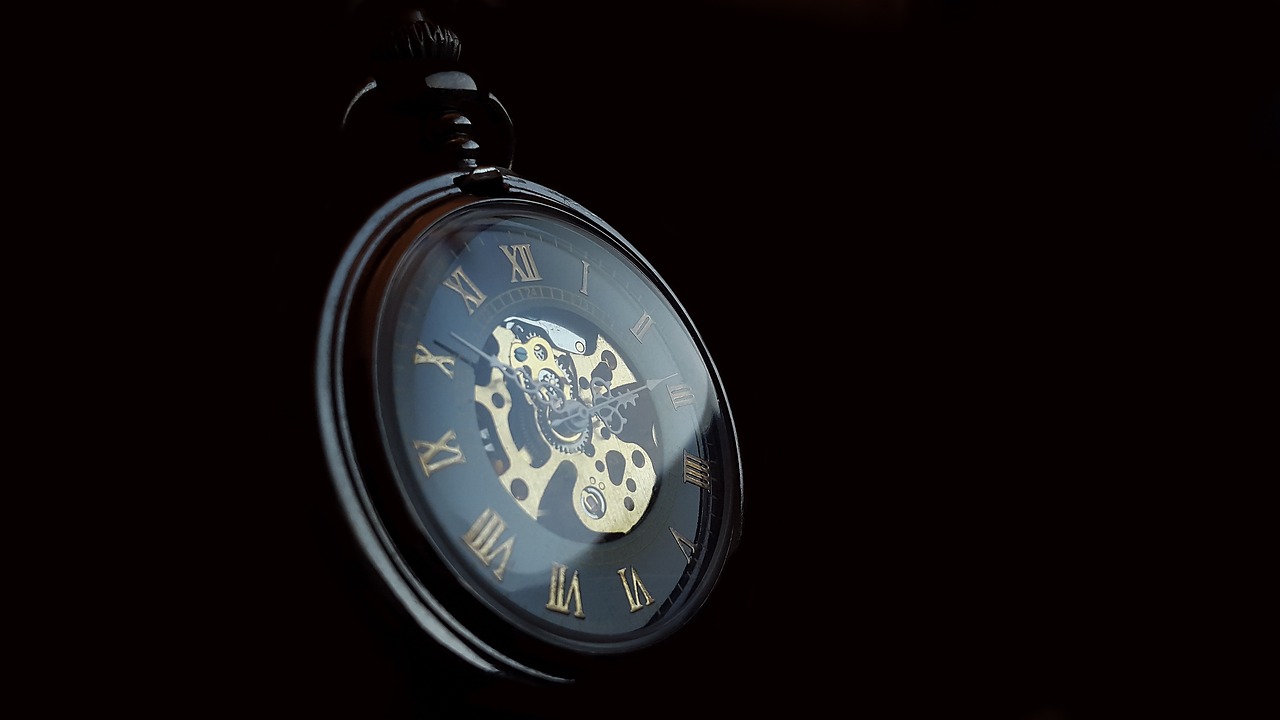
The Year the Clocks Stopped
In 1970, Switzerland employed approximately 89,000 people in its watch industry. By 1984, that number had collapsed to 28,000. Two-thirds of the workforce — gone. Hundreds of companies — gone. Entire towns in the Jura mountains, where watchmaking had been the sole source of employment for generations, hollowed out like abandoned mines. The Swiss share of global watch production, which had stood at roughly 40 per cent at the start of the decade, fell below 15 per cent. The country that had defined precision timekeeping for three centuries was being buried by a technology it had invented but refused to take seriously.
The technology was quartz. A sliver of synthetic quartz crystal, stimulated by a tiny electric current from a battery, vibrates at a frequency of exactly 32,768 times per second. Divide that frequency down electronically and you get a pulse precisely once per second — more accurate than the finest mechanical movement ever built by human hands. No mainspring. No balance wheel. No escapement. No oil that degrades, no gear train that wears, no positional error that accumulates as the watch moves on a wrist. Just a crystal, a circuit, and a battery. Accurate to within fifteen seconds per month, compared to a mechanical watch that might drift fifteen seconds per day.
The Japanese understood this immediately. Seiko had been working on quartz technology since the early 1960s, and on Christmas Day 1969, it released the Seiko Astron — the world's first commercial quartz wristwatch. It cost 450,000 yen, roughly the price of a Toyota Corolla. But that price would fall. Within five years, Seiko, Citizen, and Casio were mass-producing quartz watches at a fraction of the cost of Swiss mechanical movements. By the late 1970s, a Japanese quartz watch that kept better time than a Patek Philippe could be bought for less than the price of a restaurant meal.
The irony — and it is an irony that still stings — is that the Swiss invented quartz timekeeping for wristwatches. The Centre Electronique Horloger (CEH) in Neuchâtel, a research consortium funded by the Swiss watch industry, developed the Beta 21 quartz calibre and presented it at the 1967 Concours de Chronométrie at the Neuchâtel Observatory. Swiss engineers had solved the fundamental problem. But the Swiss industry, fragmented into hundreds of small, fiercely independent companies, each specialising in a particular component or complication, could not agree on what to do with the solution. The quartz movement threatened the entire economic model of Swiss watchmaking: the handcrafted mechanical movement, assembled from hundreds of individual parts by skilled artisans, was the foundation on which Swiss pricing, Swiss prestige, and Swiss employment rested. Quartz made all of that irrelevant.
So the Swiss hesitated. And the Japanese did not.
The Architecture of a Crisis
To understand why the quartz crisis was existential rather than merely disruptive, you need to understand how Swiss watchmaking was structured. It was not an industry in the modern sense — it was an ecosystem, layered and interdependent, that had evolved over centuries in the valleys and plateaus of the Jura mountains along the French border.
At the top sat the grandes maisons — Patek Philippe, Audemars Piguet, Vacheron Constantin — making complicated timepieces in small volumes for wealthy collectors. Below them, mid-range manufacturers like Omega, Longines, and Tissot produced watches in larger quantities, relying on purchased movements from specialist ébauche makers. And at the base of the pyramid were those ébauche makers, the most important of which was a company called Ébauches SA, which supplied the raw movements — the calibres — that hundreds of smaller brands would finish, case, and sell under their own names.
This structure was the Swiss watch industry's great strength and its fatal vulnerability. Strength, because it allowed extraordinary specialisation: one firm might do nothing but make hairsprings, another nothing but jewelled bearings, another nothing but cases. Each could invest all its expertise in one narrow domain, producing components of a quality that no vertically integrated manufacturer could match. Vulnerability, because when quartz eliminated the need for most of these components, the entire supply chain collapsed simultaneously. A quartz movement has perhaps fifty parts. A mechanical movement has between one hundred and three hundred. The hundreds of firms that made the parts that quartz rendered unnecessary had nowhere to go.
The banks, which had financed the industry for generations, began calling in loans. Smaller firms went bankrupt. Skilled watchmakers — people who had spent years learning to adjust a tourbillon or regulate a chronometer — found themselves unemployed, their expertise as commercially relevant as a blacksmith's in the age of the automobile. The Swiss government, alarmed by the social consequences in the Jura region, looked for solutions but found none. You cannot legislate consumer preference, and consumers worldwide were choosing quartz.
By the early 1980s, the two largest Swiss watch groups — ASUAG (which controlled Ébauches SA, Longines, and Rado) and SSIH (which controlled Omega and Tissot) — were both effectively insolvent. The banks that held their debt were preparing to liquidate. If they had done so, the industrial infrastructure of Swiss watchmaking — the factories, the tooling, the supply chains, the accumulated knowledge of centuries — would have been sold off piecemeal, probably to Japanese or Hong Kong buyers. Swiss mechanical watchmaking as a living industry would have ended.
The Hayek Intervention
Nicolas George Hayek was not a watchmaker. He was a Lebanese-born, Zurich-based management consultant who ran a firm called Hayek Engineering. In 1983, the consortium of Swiss banks that held the debt of ASUAG and SSIH commissioned Hayek to produce a study on whether the two groups should be liquidated or merged. The banks expected him to recommend liquidation. They got something else entirely.
Hayek's report, delivered in the spring of 1983, argued that the Swiss watch industry could not only survive but thrive — provided it was radically restructured and given a product that could compete with Japanese quartz on price while remaining unmistakably Swiss. He proposed merging ASUAG and SSIH into a single entity, rationalising production, preserving the high-end mechanical brands, and launching a new product that would attack the Japanese in the low-cost segment they had made their own.
That product already existed, at least in prototype. Engineers at ETA SA, the movement-making subsidiary of ASUAG, had been developing a radically simplified quartz watch since 1979. The project, led by engineers Ernst Thomke, Elmar Mock, and Jacques Müller, had a deceptively simple brief: build a Swiss quartz watch that could be manufactured at a cost competitive with anything coming out of Japan or Hong Kong. The result was an engineering tour de force disguised as a toy.
The new watch — eventually named Swatch, a contraction of "second watch" — broke every convention of Swiss watchmaking. Instead of a metal case with a separate caseback, the movement was mounted directly into a plastic case that was ultrasonically welded shut. The number of components was reduced from the typical ninety-one in a quartz watch to just fifty-one. The movement was not assembled from separate plates and bridges — it was built up from the caseback itself, which served as the base plate. The entire manufacturing process was automated, requiring minimal hand labour. The retail price: 50 Swiss francs. About $40 at 1983 exchange rates.
Swatch was not a cheap watch pretending to be Swiss. It was a Swiss watch that proved cheapness and quality were not mutually exclusive — and that a watch could be fashion, not just function.
Nicolas Hayek, interview with Harvard Business Review, 1993
The banks were sceptical. The traditional watchmaking establishment was appalled. A plastic Swiss watch, sold at a price that undercut the Japanese? It seemed like an admission of defeat. But Hayek was not interested in fighting the quartz war on Japanese terms. He understood something that the rest of the industry had missed: the threat from Japan was not technological. It was emotional. Japanese quartz watches were commodities — interchangeable, forgettable, defined entirely by function. If Switzerland tried to compete on function alone, it would lose. It had already lost. The opportunity was to compete on meaning.
Swatch launched on 1 March 1983 in Zurich. Within a year, it had sold over a million units. By 1986, annual production exceeded ten million. The watches came in hundreds of designs — bold colours, collaborations with artists, limited editions that created collector frenzy. Swatch was not merely a watch. It was a fashion accessory, a cultural statement, a collectible. People wore two at once. They pinned them to lapels. They mounted them on walls. The product was so successful that it single-handedly subsidised the restructuring of the entire Swiss watch industry.
Rebuilding the Pyramid
Hayek did not save the Swiss watch industry by making cheap plastic watches. He saved it by using cheap plastic watches to buy time — and money — for a far more audacious strategy: the resurrection of Swiss mechanical watchmaking as a luxury proposition.
In 1985, Hayek personally led a group of Swiss investors to acquire a majority stake in the merged ASUAG-SSIH entity, which was renamed SMH (Société de Microélectronique et d'Horlogerie). He became CEO and chairman. He now controlled the largest watch company in the world, with a portfolio that spanned the entire market: Swatch and Flik Flak at the bottom, Tissot and Longines in the middle, Omega and Blancpain at the top, and ETA as the movement manufacturer that supplied them all — plus hundreds of third-party brands.
Hayek's strategic insight was that the watch industry had a future only if it stopped thinking of itself as a timekeeping industry. Quartz had won the timekeeping war. A $10 Casio was more accurate than a $100,000 Patek Philippe. If accuracy was the only criterion, the mechanical watch was obsolete. But Hayek bet that accuracy was not the only criterion — and that for a significant segment of consumers, it was not even the primary one.
He was right. The rehabilitation of the mechanical watch as a luxury object — not despite its technological inferiority to quartz, but because of it — is one of the most remarkable marketing and cultural pivots in industrial history. A mechanical watch became valuable precisely because it was unnecessary. It kept worse time than a quartz watch. It required regular servicing. It was fragile, temperamental, and expensive. And those qualities, reframed through the lens of craftsmanship, heritage, and exclusivity, became assets rather than liabilities.
- Swatch at the entry level — high-volume, high-margin, funding the entire restructuring
- Tissot and Longines repositioned as accessible Swiss quality in the mid-range
- Omega elevated through Bond films, Olympic timing, and NASA heritage to compete with Rolex
- Blancpain relaunched as a pure mechanical luxury house, rejecting quartz entirely
- ETA movements supplying both group brands and the broader industry, creating structural dependency
- Vertical integration from hairsprings to finished watches, controlling cost and quality at every level
The revival was neither instant nor automatic. It required decades of investment in manufacturing, marketing, and brand building. Blancpain, which had been dormant, was relaunched by Jean-Claude Biver with the slogan "Since 1735 there has never been a quartz Blancpain watch. There never will be." Omega was repositioned through its association with James Bond and NASA's space programme. Longines leaned into its heritage as a maker of precision chronographs. Each brand in the portfolio was given a distinct identity and price positioning, carefully calibrated to avoid cannibalisation.
In 1998, SMH was renamed the Swatch Group, an acknowledgment that the little plastic watch had become the foundation upon which everything else rested. By then, the group controlled eighteen brands, multiple movement factories, and a vertically integrated supply chain that gave it enormous cost advantages. More importantly, Swatch Group controlled ETA, which supplied movements not just to its own brands but to the majority of the Swiss watch industry. This gave Hayek leverage that bordered on monopoly power — a fact that would create enormous controversy when, in the early 2000s, Swatch Group began restricting third-party access to ETA movements, forcing independent brands to develop their own calibres or find alternative suppliers.
The Numbers That Defy Logic
The modern Swiss watch industry operates on a paradox that would have seemed absurd to anyone observing the crisis of the early 1980s. Switzerland produces roughly 2 per cent of the world's watches by volume. But it captures roughly 55 per cent of the world's watch industry value. In 2023, Swiss watch exports reached CHF 26.7 billion — an all-time record. The average price of an exported Swiss watch was approximately CHF 930, compared to roughly CHF 5 for the average watch exported from China, which produces the overwhelming majority of the world's timepieces by unit volume.
These numbers tell a story of an industry that did not merely survive disruption — it used disruption to move permanently upmarket. The quartz crisis killed the Swiss watch industry's middle. The cheap end went to Asia. The commodity segment never came back. What remained, and what flourished, was the top: watches sold not as timekeeping instruments but as expressions of engineering art, personal taste, and social signalling. The waiting list for a Rolex Submariner or an Audemars Piguet Royal Oak stretches months or years. Patek Philippe's Nautilus trades on secondary markets for multiples of its retail price. Richard Mille produces watches that cost more than houses and sells every one.
The "Swiss Made" designation — which requires that at least 60 per cent of the production costs of a watch, including the movement, be incurred in Switzerland — has become one of the most valuable origin labels in global commerce. It signifies not just geography but a set of associations: precision, tradition, quality, permanence. These associations were not inevitable. They were constructed, over decades, through consistent investment in manufacturing quality, brand storytelling, and the deliberate cultivation of scarcity. The Swiss watch industry did not merely recover from the quartz crisis. It emerged from it with a more durable competitive position than it had ever held before.
The geographic concentration remains extraordinary. The canton of Neuchâtel, with a population of 176,000, hosts the headquarters of dozens of watch brands and component manufacturers. The Vallée de Joux in the canton of Vaud — a remote valley accessible by a single mountain road — is home to Audemars Piguet, Jaeger-LeCoultre, and Blancpain, three of the most prestigious watchmaking houses in existence. Breguet, the house founded by Abraham-Louis Breguet in Paris in 1775, now manufactures in the Vallée de Joux under Swatch Group ownership. The valley has a resident population of roughly 7,000 people and produces watches worth hundreds of millions of francs annually.
The workforce has partially recovered. By the mid-2020s, the Swiss watch industry employed approximately 65,000 people — still well below the 1970 peak, but remarkable given that the industry was on the verge of complete dissolution forty years earlier. These jobs are overwhelmingly skilled positions: watchmakers, engineers, metallurgists, finishing specialists, gemsetters, enamellers. The median salary is high. The training pipeline is long. A watchmaker trained at the Watchmakers of Switzerland Training and Educational Program (WOSTEP) or the Patek Philippe school in Geneva undergoes years of instruction before being trusted with a client's movement.
What the Crisis Taught
The Swiss watch industry's near-death experience and subsequent resurrection offers lessons that extend far beyond horology. It is, at its core, a case study in how an industry responds when its core technology is rendered obsolete — and the answer is not always to adopt the new technology faster than the competition.
The Japanese won the quartz war. They won it decisively and permanently. Swiss companies eventually made quartz watches too — Swatch itself is a quartz watch — but Switzerland never recaptured the mass-market segment. What Switzerland did instead was redefine what a watch is. Not a timekeeping device but a piece of wearable engineering, an heirloom, a cultural artefact. The mechanical watch became the vinyl record of timekeeping: technically inferior, emotionally superior, and commercially viable precisely because of the gap between those two qualities.
Nicolas Hayek understood this before almost anyone else. In a 1993 interview with Harvard Business Review, he articulated the philosophy with characteristic directness: "We are not just selling a consumer product, or even a branded product. We are selling an emotional product. You wear a watch on your wrist, right against your skin. You have it there for twelve hours a day, maybe twenty-four hours a day. It can be a series of ordinary things, or it can be something beautiful, something mechanical, something with a soul. We are offering people a sense of identity."
We are not just selling a consumer product. We are selling an emotional product. You wear a watch on your wrist, right against your skin. It can be something ordinary, or it can be something with a soul.
Nicolas Hayek, Harvard Business Review, 1993
The parallel to other European industries facing technological disruption is unmistakable. European automakers face the electric vehicle transition much as Swiss watchmakers faced quartz: a new technology that is functionally superior in key dimensions, driven by Asian competitors with formidable manufacturing scale and cost advantages. The lesson from Switzerland is not that you can ignore the new technology — you cannot — but that technological superiority alone does not determine market outcomes. Brand, heritage, craftsmanship, design, emotional resonance — these are competitive advantages that cannot be replicated by scaling a factory or reducing a bill of materials. They are accumulated over generations and, once lost, are nearly impossible to rebuild.
But the Swiss watch story also carries a warning. The industry survived because one man — Hayek — had the vision and the credibility to force a restructuring that the fragmented industry could never have achieved on its own. Without the Hayek intervention, Swiss watchmaking would have been liquidated by its creditors. The ecosystem would have been dismantled. The knowledge would have dispersed. The brands would have become labels attached to Chinese-manufactured products, trading on residual prestige until even that faded. Survival was not inevitable. It was contingent on a specific individual making a specific set of decisions at a specific moment when the window for action was almost closed.
Still Ticking
Nicolas Hayek died on 28 June 2010, at the age of eighty-two, at the Swatch Group headquarters in Biel/Bienne. He was at his desk. The company he had built from the wreckage of a dying industry was, at the time of his death, the largest watch company in the world by revenue. His son, Nick Hayek Jr., succeeded him as CEO and continues to run the group today.
The Swatch Group's portfolio in 2026 includes Breguet, Blancpain, Glashütte Original, Omega, Longines, Rado, Tissot, Hamilton, Certina, Mido, and Swatch itself, among others. The group also manufactures movements, components, and electronic systems through subsidiaries including ETA, Nivarox-FAR (which makes virtually all of the world's watch hairsprings), and Renata (watch batteries). It is vertically integrated to a degree that no other watch company can match — a direct consequence of Hayek's strategy of controlling every link in the value chain.
Outside the Swatch Group, the Swiss watch industry has consolidated around a handful of major players. Rolex, privately owned by the Hans Wilsdorf Foundation, is the single most valuable watch brand in the world, with estimated annual revenues exceeding CHF 10 billion. Richemont, the Swiss-South African luxury group founded by Johann Rupert, owns Cartier, IWC, Jaeger-LeCoultre, Panerai, Piaget, and Vacheron Constantin. Patek Philippe remains family-owned, the Stern family having held control since 1932. LVMH, through its watch division, owns TAG Heuer, Hublot, and Zenith. And dozens of independent brands — from established houses like Audemars Piguet to younger brands like MB&F, H. Moser & Cie, and F.P. Journe — continue to thrive in an industry that, fifty years ago, appeared to be dying.
The smartwatch — the latest existential threat, led by Apple, which sells more watches annually than the entire Swiss industry combined — has so far failed to dent the Swiss luxury segment. Apple Watch buyers and Patek Philippe buyers are not the same customers making the same purchase decision. The smartwatch is a consumer electronics product with a two-year upgrade cycle. A mechanical watch is an heirloom with a multi-generational lifespan. They coexist not because the Swiss industry has adapted to smartwatches, but because it learned, during the quartz crisis, that its true competitive advantage was never about telling time.
Walk through the streets of La Chaux-de-Fonds or Le Locle — twin cities in the Jura mountains, both UNESCO World Heritage Sites for their watchmaking heritage — and you will see the workshops where hands still assemble movements with tweezers and loupes, where dials are still painted by artists with single-hair brushes, where cases are still polished by craftspeople who can distinguish between a surface finished to mirror brightness and one that is merely very shiny. These are not museum demonstrations. They are active production facilities, filling orders for watches that customers have waited years to receive.
The Swiss watch industry did not survive the quartz crisis by being faster, cheaper, or more technologically advanced than its competitors. It survived by being more meaningful. It survived because one man saw that the question was not how to make a better clock, but how to make a watch that people wanted to wear even when their phone could tell the time. It survived because Europe has always been good at making things that endure — and because, sometimes, the most radical innovation is not a new technology but a new way of understanding what you already do.
Today, a mechanical watch assembled in the Vallée de Joux keeps less accurate time than a free app on any smartphone. It costs thousands, sometimes hundreds of thousands, of francs. It requires servicing every five to eight years. It is, by every rational measure, an absurd product. And it has never been more desirable. That is the Swiss watch industry's answer to the quartz crisis — not a technical solution, but a human one. Not innovation through technology, but innovation through meaning. Made in Switzerland. Still ticking.
Sources
- Donzé, Pierre-Yves. "History of the Swiss Watch Industry: From Jacques David to Nicolas Hayek." Peter Lang, 2011 — https://www.peterlang.com/document/1052378
- Federation of the Swiss Watch Industry (FH) — Export Statistics 2023 — https://www.fhs.swiss/eng/statistics.html
- Taylor, William C. "Message and Muscle: An Interview with Swatch Titan Nicolas Hayek." Harvard Business Review, March-April 1993 — https://hbr.org/1993/03/message-and-muscle-an-interview-with-swatch-titan-nicolas-hayek
- Glasmeier, Amy K. "Manufacturing Time: Global Competition in the Watch Industry, 1795-2000." Guilford Press, 2000 — https://www.guilford.com/books/Manufacturing-Time/Amy-Glasmeier/9781572305243
- Swatch Group Annual Report 2024 — https://www.swatchgroup.com/en/services/archive/annual-reports
- Trueb, Lucien F. "The World of Watches: History, Technology, Industry." Ebner Publishing, 2005 — https://archive.org/details/worldofwatches0000true
- UNESCO World Heritage — La Chaux-de-Fonds / Le Locle, Watchmaking Town Planning — https://whc.unesco.org/en/list/1302
- Moon, Youngme. "The Birth of the Swatch." Harvard Business School Case 504-096, 2004 — https://www.hbs.edu/faculty/Pages/item.aspx?num=31810